SEO vs GEO: What Your Business Actually Needs in 2026
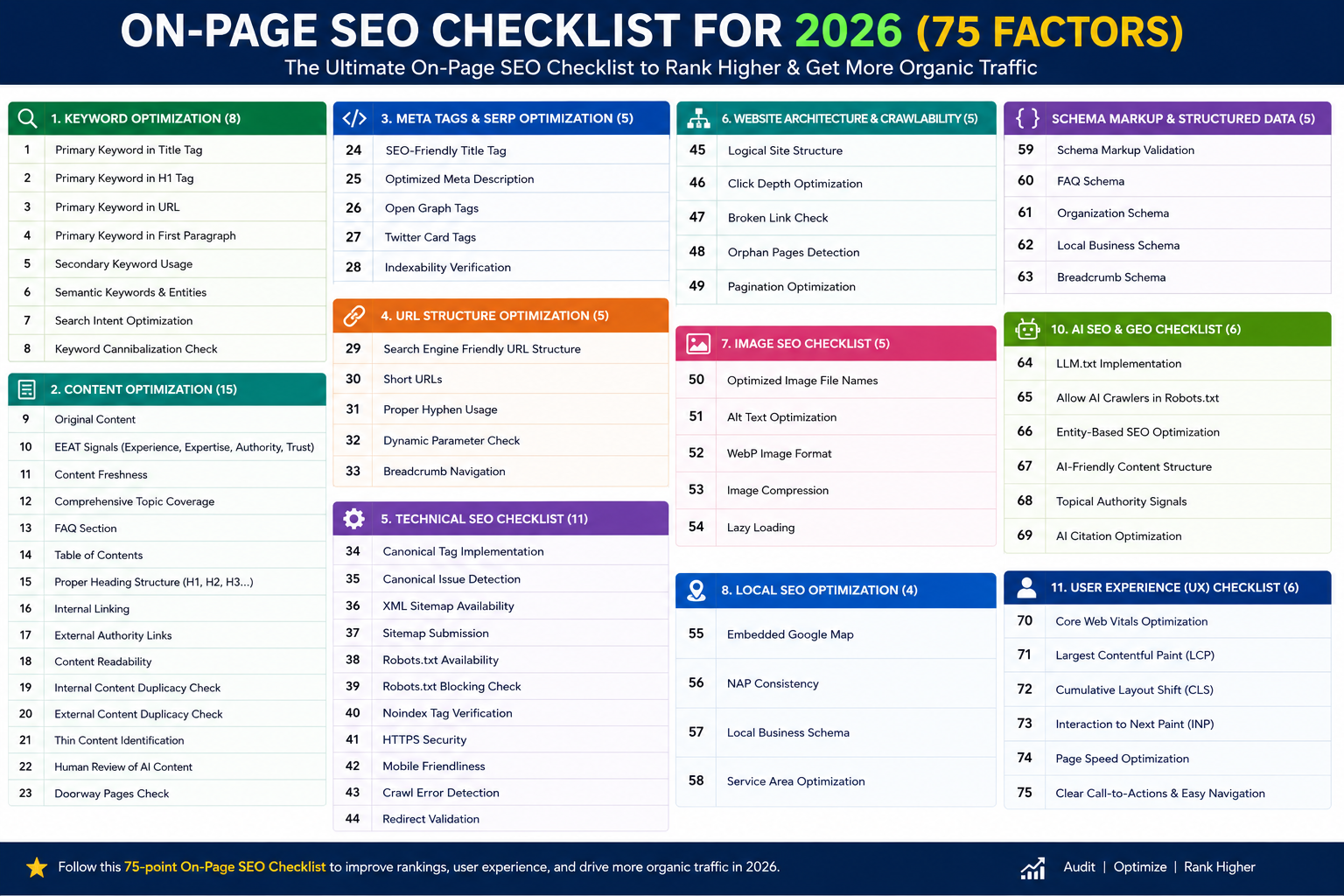
Search has changed. People no longer only type a keyword into Google and click a blue link. Many now ask ChatGPT, Gemini, or Perplexity a direct question and expect a direct answer.
This shift has created a new term: GEO, or Generative Engine Optimization. If you run a business in Noida or anywhere in India, you have probably heard both “SEO” and “GEO” this year. But what do they actually mean? And do you need both?
This guide breaks it down in plain language, without the jargon.
What is SEO?
SEO stands for Search Engine Optimization. It is the practice of improving your website so it ranks higher on Google’s results page.
When someone searches “digital marketing agency in Noida,” SEO decides which websites show up in that list of 10 blue links. Good SEO covers:
- Keyword research and on-page content
- Technical site health (speed, mobile-friendliness, security)
- Backlinks from other trusted websites
- Local SEO signals (Google Business Profile, reviews, citations)
SEO has been the backbone of online visibility for over 20 years. It still is. But it is no longer the only game in town.
What is GEO?
GEO stands for Generative Engine Optimization. It is the practice of structuring your content so AI tools like ChatGPT, Gemini, Claude, and Perplexity pick it up and mention it when answering a user’s question.
Here is the key difference: Google gives users a list of links to choose from. AI tools give users one direct answer, built from multiple sources. GEO is about making sure your business is one of those sources.
Some people also call this AEO (Answer Engine Optimization) or AI SEO. The names are different, but the goal is the same — get your brand mentioned inside the AI’s answer, not just ranked in a list.
SEO vs GEO: The Real Difference
| Point | SEO | GEO |
| Goal | Rank on Google’s results page | Get cited inside AI-generated answers |
| Success metric | Ranking position, clicks | Citation frequency, brand mentions |
| Where it shows up | Google, Bing search results | ChatGPT, Gemini, Perplexity, AI Overviews |
| Core need | Keywords, backlinks, technical SEO | Clear structure, facts, authority, easy-to-quote content |
| User action | Clicks your website | Reads the AI’s answer, may never visit your site |
The good news is that both are built on the same foundation. Well-structured, factual, helpful content tends to perform well in both Google search and AI answers. You are not choosing one over the other. You are building on what you already have.
Why GEO Matters for Your Business in 2026
A growing number of people now start their research on AI tools instead of Google. When someone asks an AI tool “which is the best digital marketing agency near me” or “how much does SEO cost in Noida,” the AI gives one answer. If your business is not part of that answer, that customer never even sees your name.
This matters more for local and service businesses than most owners realise. Someone researching a dentist, a real estate agent, or a marketing agency is increasingly likely to ask an AI tool first, then verify with a quick Google search.
If your content is not built for AI to read and quote, you lose that first impression entirely.
How GEO Actually Works
AI tools do not work the same way as Google’s ranking algorithm. Understanding the process helps you write content that gets picked up.
- Crawling – AI tools crawl and index web pages, similar to how Google does, though the crawlers are different (GPTBot, PerplexityBot, ClaudeBot, and so on).
- Parsing – The AI breaks your page into small, meaningful chunks — a definition, a step, a fact, a comparison.
- Synthesizing – When a user asks a question, the AI pulls the most relevant, clearly written chunks from multiple sources and combines them into one answer.
This means clarity matters more than clever writing. If your answer to a question is buried in the fifth paragraph after a long story, the AI is less likely to use it.
How to Optimize for GEO (Practical Steps)
- Answer the question in the first 40-50 words Start every section with a direct, simple answer. Add detail after. AI tools tend to pull from the top of a section first.
- Use clear headings that match real questions Instead of a heading like “Our Approach,” use “How Does SEO Pricing Work in Noida?” Questions as headings make it easier for AI to match your content to a user’s query.
- Build topical depth, not single articles One blog post rarely builds authority. A cluster of connected pages covering a topic from every angle signals real expertise, both to Google and to AI tools.
- Add real facts, numbers, and sources AI models favour content with specific, checkable information over vague claims. “We increased organic traffic by 320% in 6 months” performs better than “we deliver great results.”
- Use structured data (schema markup) FAQ schema, Article schema, and LocalBusiness schema help both search engines and AI tools understand your content quickly and accurately.
- Keep content fresh Citations inside AI answers change often, sometimes month to month. Updating your content regularly keeps you in the running.
- Make sure AI crawlers can access your site Many websites accidentally block GPTBot, PerplexityBot, or ClaudeBot through bot-protection settings. Check your robots.txt file to confirm these crawlers are allowed in.
- Build genuine authority signals Reviews, mentions on other trusted sites, author bios with real credentials, and consistent business information across the web all help AI tools trust your content enough to cite it.
Do You Need to Choose Between SEO and GEO?
No. This is not an either-or decision. GEO builds directly on the same foundation as SEO — useful content, a fast and secure website, and clear structure. If your SEO fundamentals are weak, your GEO performance will be weak too.
Think of it this way: SEO gets you found. GEO gets you mentioned. A serious digital marketing strategy in 2026 needs both working together, not one replacing the other.
What This Means for Noida Businesses
Local businesses in Noida, Greater Noida, and Ghaziabad are still mostly competing on traditional local SEO — Google Maps rankings, reviews, and local keyword pages. That part has not changed.
What has changed is the extra layer on top. When someone searches “best digital marketing agency near me” on ChatGPT instead of Google, your website’s structure, clarity, and authority signals decide whether you get mentioned. Businesses that get ahead of this now will have a real advantage over competitors who wait.
Frequently Asked Questions
Is GEO replacing SEO? No. GEO is an extra layer built on top of SEO, not a replacement. Content that already ranks well on Google tends to perform well in AI answers too.
What is the difference between GEO and AEO? AEO (Answer Engine Optimization) focuses on Google’s direct-answer features like AI Overviews and featured snippets. GEO focuses on fully generative tools like ChatGPT and Perplexity. In practice, most businesses treat them as the same discipline.
Do I need special tools to start with GEO? Not necessarily. You can start by asking ChatGPT, Gemini, and Perplexity 10-15 questions relevant to your business and checking if your website gets mentioned. This shows you where you stand today.
How long does it take to see GEO results? It varies by platform. Gemini tends to reflect strong existing SEO quickly. Other platforms, like Claude, can take several weeks to a few months to pick up and trust new content.
Does my website need to rank on Google to appear in AI answers? Not always, but it helps a lot. AI tools often lean on the same authority and quality signals that traditional search algorithms use, so strong SEO makes GEO easier.
Can a small business in Noida compete with bigger agencies on GEO? Yes. GEO rewards clear, factual, well-structured content more than sheer website size. A smaller business with focused, honest content can be cited just as easily as a large one.
Conclusion
SEO is not going away, and GEO is not a passing trend. Together, they decide whether your business shows up when someone searches on Google or asks an AI tool a question. The businesses that adapt their content now, with clear answers, real facts, and solid structure, will be the ones customers find first, however they choose to search.